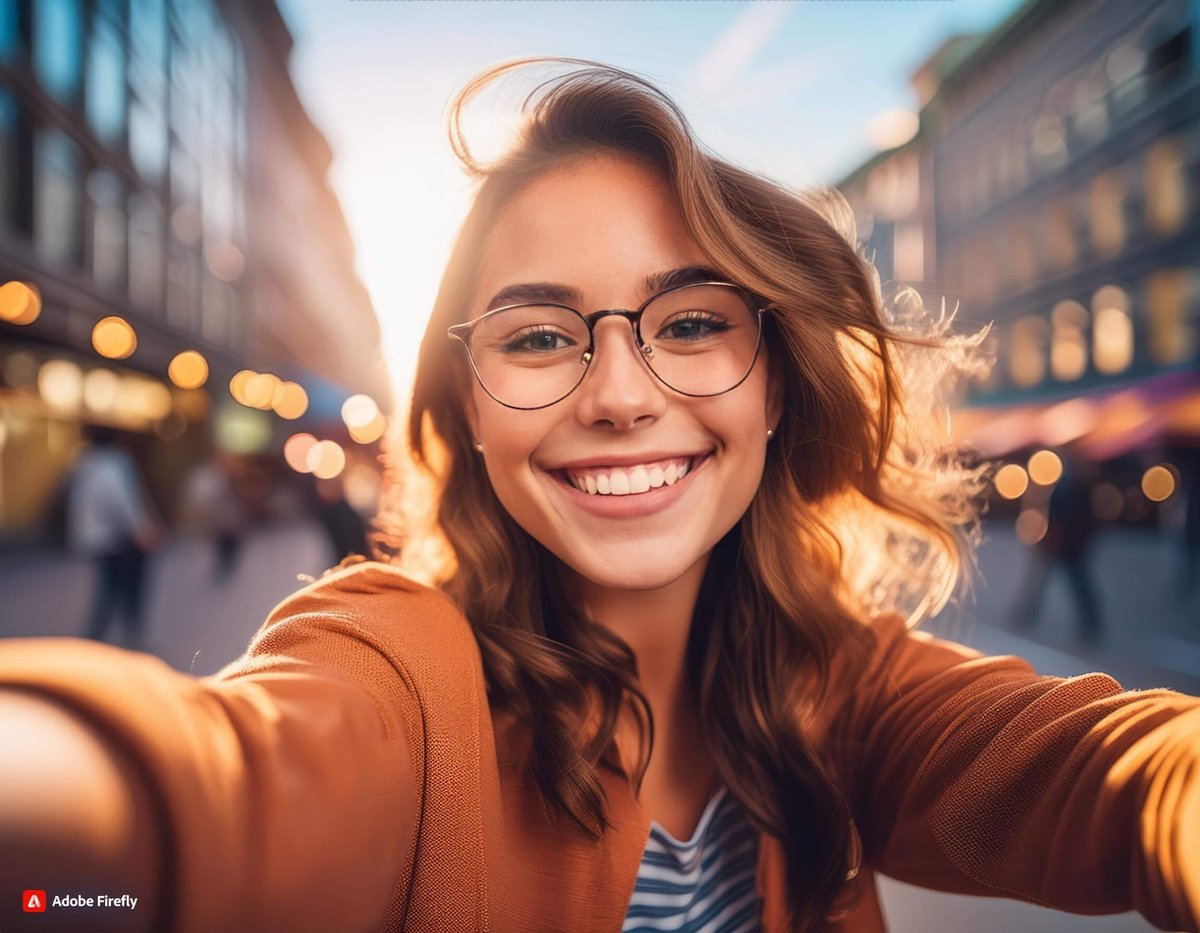
The world of digital creation is undergoing a seismic shift, and at its epicenter are free AI image generators (community recommendations) that are democratizing artistry faster than ever before. Gone are the days when stunning visuals required expensive software or specialized skills; today, a simple text prompt can conjure worlds. But with so many options popping up, how do you sort the game-changers from the time-wasters, especially when "free" often comes with asterisks?
This guide cuts through the noise. We've tapped into the collective wisdom of creators, marketers, artists, and hobbyists who are actively pushing these tools to their limits. What emerges is a clear picture of which platforms truly deliver on their promise, offering not just "free" but genuine value, quality, and a smooth creative experience.
At a Glance: Your Quick Guide to Free AI Image Generators
- Diverse Options for Every Need: Whether you need quick social media graphics, detailed concept art, or images with perfect typography, there's a free AI generator for you.
- "Free" Comes with Nuance: Most free tiers involve daily credits, slower generation speeds, public outputs, or limited feature sets. Understand these limits to avoid frustration.
- Quality Varies: Some tools excel at photorealism, others at artistic styles, and a select few at integrating text. Match the tool to your visual goal.
- Prompt Engineering is Key: Even with the best tools, learning to craft effective prompts dramatically improves your results.
- Integration is a Game Changer: Tools like Adobe Firefly, Microsoft Designer, and Canva offer seamless AI integration into existing design workflows.
- Community & Learning: Platforms like Playground AI and NightCafe foster communities where you can learn, share, and get inspiration.
Why Free AI Image Generators Matter (And What to Look For)
In 2025, the landscape of AI image generation is a vibrant ecosystem. You'll find standalone web platforms, integrated design apps, and even conversational AI assistants that can whip up visuals on demand. For creators, this explosion means unprecedented access to tools that can elevate projects, from ideation to final production, without breaking the bank.
But what makes a good free AI image generator? The community consistently points to a few critical evaluation criteria:
- Image Quality: Does it produce visually appealing, coherent, and artifact-free images?
- Prompt Fidelity: How well does the generator interpret your text prompts and translate them into the visual output you intended?
- Ease of Use: Is the interface intuitive? Can a beginner jump in and start creating without a steep learning curve?
- Speed: How quickly does it generate images, especially on its free tier?
- Free Plan Limits: What are the daily credit allowances, resolution caps, usage restrictions, and commercial terms?
The ideal tool for you will balance these factors against your specific needs. Are you looking to experiment wildly, or do you need reliable, consistent output for a project?
The Community's Top Picks: Free AI Image Generators You Can Start Using Today
Let's dive into the platforms that creators are championing for their capabilities, especially when operating on a shoestring budget.
1. Adobe Firefly: Professional Polish, Free Credits
Adobe Firefly has quickly become a darling for its commitment to ethical AI and high-quality outputs. Trained on Adobe Stock and public domain content, it offers a strong sense of legal clarity for commercial use. Its real magic, however, lies in its seamless integration with the Adobe Creative Cloud ecosystem, allowing you to use Generative Fill and Generative Expand directly within Photoshop or Illustrator.
- Free Plan Snapshot: You get 25 monthly generative credits. These can deplete quickly if you're experimenting heavily, as each generation (or fill/expand operation) uses credits.
- Pros:
- Commercially safe outputs due to ethical training data.
- Produces professional-grade image quality.
- Deep integration with Adobe Creative Cloud makes it invaluable for existing users.
- User-friendly interface, perfect for beginners.
- Cons:
- The 25 monthly free credits can feel very restrictive for frequent use.
- Some more advanced features are paywalled.
- Offers fewer artistic styles compared to some other dedicated art generators.
- Best For: Graphic designers, digital marketers, and creative professionals already entrenched in the Adobe ecosystem who need high-quality, legally sound imagery.
2. Microsoft Designer: AI-Powered Design for Everyone
Microsoft Designer is a surprisingly robust and user-friendly platform, powered by DALL-E, that combines AI image creation with a basic design toolset and templates. It's designed to help you create social media posts, invitations, and other visual content quickly, saving your creations directly to OneDrive and integrating smoothly with Microsoft 365 and Copilot.
- Free Plan Snapshot: Completely free to use with a Microsoft account, offering a generous number of generations.
- Pros:
- Truly free for most core functions (requires a Microsoft account).
- Clean, intuitive interface that beginners will appreciate.
- Excellent for quick, professional-looking visuals within a Microsoft workflow.
- Integrates well with Copilot for on-demand image creation.
- Cons:
- AI features may have age or regional restrictions.
- Cloud storage counts towards your OneDrive quota.
- Access to advanced AI features (e.g., higher resolutions, faster generation) might require a Microsoft 365 subscription.
- Best For: Small business owners, social media managers, and educators who need to produce professional-quality visuals quickly and efficiently within the Microsoft ecosystem.
3. Canva (Magic Media “Text to Image”): Seamless AI within Your Design Workflow
Canva has become a staple for many non-designers and small businesses, and its Magic Media "Text to Image" feature brings AI generation directly into its incredibly popular design platform. This integration allows you to generate images and immediately drop them into your social media posts, presentations, or marketing flyers.
- Free Plan Snapshot: Offers 50 lifetime text-to-image credits, which is a good starting point. Canva Pro users get a more generous 500 monthly credits.
- Pros:
- Unbeatable integrated workflow for quick design projects.
- Extremely beginner-friendly, leveraging Canva's intuitive interface.
- Access to Canva's massive library of templates for immediate application of generated visuals.
- Great for maintaining consistent branding across social media assets.
- Cons:
- The 50 lifetime free credits are a one-time offer; they don't refresh.
- Some premium AI features and assets require a Pro subscription.
- While convenient, the artistic generation quality might not match dedicated AI art platforms.
- Best For: Social media managers, content creators, small business owners, and educators who prioritize an integrated design workflow and need visuals quickly.
4. Playground AI: The Sandbox for Creative Exploration
Playground AI is a fantastic web-based creative hub that offers access to multiple AI models, including various Stable Diffusion versions and its own Playground v2. It boasts a remarkably generous free tier, an integrated editor for in-painting and out-painting, and a social feed where you can learn from others' prompts.
- Free Plan Snapshot: Provides a significant number of daily images (e.g., 500-1,000 depending on settings), but generation can be slower during peak hours, and different models might have separate usage caps.
- Pros:
- One of the most generous free tiers available, allowing extensive experimentation.
- Access to multiple powerful AI models provides versatility.
- Integrated editor (in-painting, out-painting) for refining generated images.
- Active community feed offers inspiration and prompt engineering insights.
- Cons:
- Free plan performance can be slower, especially during high-traffic periods.
- The various usage caps per model can be a bit confusing initially.
- Access to more advanced models or faster generation often requires paid credits.
- Best For: Hobbyists, aspiring artists, and social media managers who want to experiment widely with AI image generation without a financial commitment.
5. Leonardo.ai: Advanced Control for Serious Creatives
Leonardo.ai is a comprehensive creative suite built for generating high-quality, often photorealistic results. What sets it apart is its focus on customization, allowing users to train and fine-tune their own AI models, creating a consistent artistic style for specific projects or brands.
- Free Plan Snapshot: Approximately 150 daily tokens (which refresh every 24 hours). Be aware that images generated on the free tier are typically public.
- Pros:
- Offers powerful customization options for truly unique and consistent output.
- Generous daily free tokens allow for significant creation.
- Scales well from hobbyist use to professional API integration.
- Capable of producing exceptionally high image quality, especially photorealism.
- Cons:
- The token system can be a bit unclear for new users trying to optimize their usage.
- The interface, while powerful, can be complex and overwhelming for beginners.
- Free-tier images are public, which may be a privacy concern for some projects.
- Ownership and usage rights for free vs. paid plans can differ significantly.
- Best For: Advanced creators, game developers, concept artists, and anyone needing customizable, professional-quality visuals and the ability to maintain consistent artistic styles.
6. Ideogram: Where Text Meets Artistry
If you've ever tried to generate an image with coherent, legible text, you know it's often a frustrating hit-or-miss affair. Ideogram changes that. It specializes in typography, using a model specifically tuned for integrating consistent, stylized text and impressive layouts directly into your generated images.
- Free Plan Snapshot: You get 10 "slow" credits per day, which typically translates to around 40 image generations (as each credit can produce multiple images). Free generations are processed at a lower priority and are public by default.
- Pros:
- Industry-leading text and typography rendering, making it ideal for logos, posters, and quotes.
- Simple, browser-friendly interface that's easy to navigate.
- Generous daily free credits for experimentation.
- Cons:
- Free generations are slower and publicly visible.
- Private generation and higher-quality downloads are paywalled.
- The free plan can be restrictive for high-volume commercial use due to speed and privacy limitations.
- Best For: Social media managers, branding agencies, and hobbyists who frequently need designs that require perfectly integrated, stylized text.
7. NightCafe: Gamified Art, Engaged Community
NightCafe is a community-focused AI art platform that supports multiple AI models, including various Stable Diffusion iterations and DALL-E. It stands out with its gamified system, encouraging consistent use and participation in daily challenges to earn credits.
- Free Plan Snapshot: You receive initial credits upon signup and can claim 5 free credits every 24 hours. Participating in challenges and competitions also awards credits.
- Pros:
- Predictable daily free credits, providing a steady stream for creation.
- Access to a range of AI models allows for diverse artistic exploration.
- Features an active gallery and strong community incentives for engagement.
- A great way to explore different artistic styles.
- Cons:
- Requires manual daily credit claiming, which can be forgotten.
- Free generations can be slower during peak times.
- Generating images with higher quality settings or more complex prompts consumes credits faster.
- Best For: Hobbyists, casual artists, and users who enjoy community engagement, exploring various artistic models, and a gamified approach to creation.
8. ClipDrop (by Stability AI): Quick Edits, AI-Powered Enhancements
ClipDrop, now part of Stability AI, isn't just an image generator; it's a suite of AI-powered editing tools focused on quickly enhancing and manipulating photos. While it offers Stable Diffusion generation, its real strength lies in features like background removal, "cleanup" (erasing objects, people, or text), and image upscaling.
- Free Plan Snapshot: Provides limited access to various tools, a queue system for Stable Diffusion generations, and 100 free API credits for developers wanting to integrate its features.
- Pros:
- Excellent, task-focused tools for rapid photo editing and enhancement.
- Integrated upscaler for improving image resolution.
- Simple API with free credits for developers, making it easy to prototype.
- Fantastic for quick background replacement or object removal.
- Cons:
- Limited free usage across its suite of tools.
- Higher-quality outputs and faster processing often require a paid subscription.
- Advanced features are primarily paywalled.
- Best For: Photographers, e-commerce managers needing quick product photo cleanups, and developers looking to prototype AI-powered image manipulation into their applications.
9. Krea AI: Interactive Creation, Real-time Feedback
Krea AI offers a unique, interactive approach to AI image generation. Its real-time canvas lets you guide the AI's output with simple drawings, shapes, colors, and text prompts that instantly evolve. It feels less like typing a command and more like co-creating with the AI.
- Free Plan Snapshot: Offers a generous number of daily free generations, allowing extensive interactive creation. Paid plans unlock advanced features like custom model training and higher-resolution upscaling.
- Pros:
- Provides a remarkably fast, interactive, 'live' generation experience.
- Offers options for training personalized models (on paid tiers) for unique styles.
- Features a modern, intuitive user interface that encourages hands-on experimentation.
- Excellent for visual ideation and quickly iterating on concepts.
- Cons:
- Many advanced features (like higher resolution outputs or custom models) are locked behind paid tiers.
- The 'compute unit' terminology for usage might be unfamiliar to new users.
- Heavy or sustained high-quality usage will require an upgrade.
- Best For: Artists, designers, and creatives who thrive on an interactive process and want to guide image generation beyond just text prompts.
10. Fotor AI Image Generator: All-in-One Photo Editing & AI Art
Fotor is an online photo editor that has integrated a capable AI image generator directly into its platform. It operates on a credit system, but notably, it offers various ways to earn these credits, making its free tier quite sustainable for regular users.
- Free Plan Snapshot: Provides initial credits upon signup, and you can earn more daily through check-ins and completing simple tasks. Crucially, images generated with free credits are downloadable without watermarks.
- Pros:
- Generates images without watermarks on the free plan, a significant advantage.
- Simple and approachable interface, ideal for casual users.
- Integrated editing suite means you can refine your AI creations immediately.
- Sustainable free model through credit earning encourages consistent engagement.
- Cons:
- The credit-based system can still feel limiting for very high-volume work.
- Offers less advanced control over the generation process compared to specialist platforms.
- The absolute highest quality outputs or specific features might be reserved for paid users.
- Best For: Social media managers, bloggers, and casual users who need quick, decent-quality images and an all-in-one solution for basic editing.
11. Hugging Face Spaces: The Open-Source Playground
For the truly curious and those who love to explore the cutting edge, Hugging Face Spaces is a treasure trove. It hosts thousands of community-built and official AI model demonstrations, providing instant, free access to a vast array of open-source models—from general image generation to highly specialized tasks.
- Free Plan Snapshot: Completely free to explore and use a staggering number of different models. There's no vendor lock-in, and you can often find new, experimental models here first.
- Pros:
- Unparalleled access to a massive variety of open-source and experimental AI models.
- Excellent for testing niche capabilities and staying up-to-date with AI advancements.
- No registration required for many "Spaces," offering instant gratification.
- A fantastic learning resource for understanding different AI architectures.
- Cons:
- Quality, performance, and uptime can vary wildly between different "Spaces" (each is a separate demo).
- Popular Spaces may experience long queues or strict rate limits.
- Not designed for sustained, high-volume, or professional production work due to inconsistencies.
- User interfaces can range from polished to purely functional.
- Best For: AI enthusiasts, researchers, developers, and creators who want to test a wide range of new, experimental, or highly specialized models without any commitment.
Making Your Choice: Beyond the Free Tier
The sheer variety of free AI image generators can be overwhelming, but it also means there's a perfect fit for almost every creator. No single "best" tool exists; the ideal choice always hinges on your project, your skill level, and your creative ambitions.
- Consider Your Workflow: Do you need AI generation integrated into a design tool (Canva, Adobe Firefly, Microsoft Designer) or a standalone platform for pure image creation (Leonardo.ai, Playground AI)?
- Identify Your Primary Need: Is it photorealism, artistic styles, specific text integration (Ideogram), interactive guidance (Krea AI), or quick photo edits (ClipDrop)?
- Embrace the Free Tier for Learning: Free accounts are fantastic for learning the ropes of prompt engineering, discovering different visual styles, and understanding what each model excels at before you invest time or money.
- Understand the "Free" Limitations: Be mindful of daily caps, slower speeds, public outputs, and potential watermarks. For commercial production, these limitations often mean strategic upgrades are necessary to ensure consistency, privacy, and full ownership.
- Commercial Use & Ownership: Always check the terms of service for each platform regarding commercial use and image ownership, especially for free-tier outputs. Some platforms retain more rights for free users, or require attribution.
To truly dig deeper into community consensus and real-world user experiences, you might also want to check out the best AI image generators on Reddit. Forums and subreddits often provide invaluable, unfiltered insights into the daily realities of using these tools.
Mastering the Art of Prompt Engineering (Even on a Budget)
Even the most powerful free AI image generator is only as good as the prompt you feed it. Learning to "speak" to the AI is a skill worth cultivating.
- Be Specific and Detailed: Instead of "dog," try "a golden retriever puppy, looking playful, running through a field of wildflowers, golden hour, realistic, bokeh background."
- Use Adjectives and Styles: "Vibrant, ethereal, gritty, cyberpunk, impressionistic, Pixar style."
- Specify Lighting and Composition: "Cinematic lighting, high contrast, wide shot, close-up, dramatic shadows."
- Experiment with Negative Prompts: Tell the AI what not to include (e.g., "-blurry, -text, -deformed"). This is particularly effective in tools like Playground AI and Leonardo.ai.
- Learn from Others: Many platforms (Playground AI, NightCafe) showcase community creations with their prompts. Reverse-engineer what works!
- Iterate, Iterate, Iterate: Don't expect perfection on the first try. Tweak your prompts, re-generate, and refine your vision.
Common Questions About Free AI Image Generators
Got lingering questions? You're not alone. Here are some quick answers to common concerns.
Are AI-generated images truly free to use commercially?
It depends entirely on the specific platform's terms of service. Adobe Firefly aims for commercial safety from the outset, given its training data. Other free tiers might mark outputs as public domain, require attribution, or restrict commercial use unless you upgrade to a paid plan. Always, always read the fine print before using free AI art for profit.
What's the catch with "free" AI generators?
The "catch" usually manifests in a few ways:
- Limited Credits: Daily or lifetime caps.
- Slower Generations: Free users are often deprioritized during peak times.
- Public Outputs: Your creations might be visible to the community.
- Lower Quality/Resolution: Higher-res downloads or advanced models are paywalled.
- Watermarks: Though thankfully, many community-recommended tools like Fotor avoid this.
- Data Usage: Your generations might be used to train future AI models.
How do AI credits work, and can I get more for free?
Credits are typically a currency that depletes with each generation or complex task. Some platforms (NightCafe, Fotor) let you earn more through daily check-ins, community engagement, or watching ads. Others simply refresh a set amount daily. Understanding your chosen platform's credit system is key to maximizing its free tier.
Can I really get professional quality for free?
Yes, for individual high-quality images, it's absolutely possible with tools like Leonardo.ai, Ideogram, or Adobe Firefly (within credit limits). However, achieving consistent, high-volume, professional-grade output that matches specific branding or project requirements often pushes you beyond the comfortable limits of a free tier. The tools are there, but the sustained workflow often requires an upgrade.
Your Next Steps: Start Creating, Experiment, and Evolve
The best way to find your perfect free AI image generator is to jump in. Pick one or two from this list that align with your immediate needs and start experimenting. Don't be afraid to try different prompts, explore various styles, and see what truly sparks your creativity.
The world of AI is constantly evolving, with new models and features emerging regularly. Stay curious, engage with the community, and let these powerful tools unlock new dimensions in your creative journey. The future of visual content is interactive, intelligent, and, remarkably often, free to explore. Happy creating!